Introduction
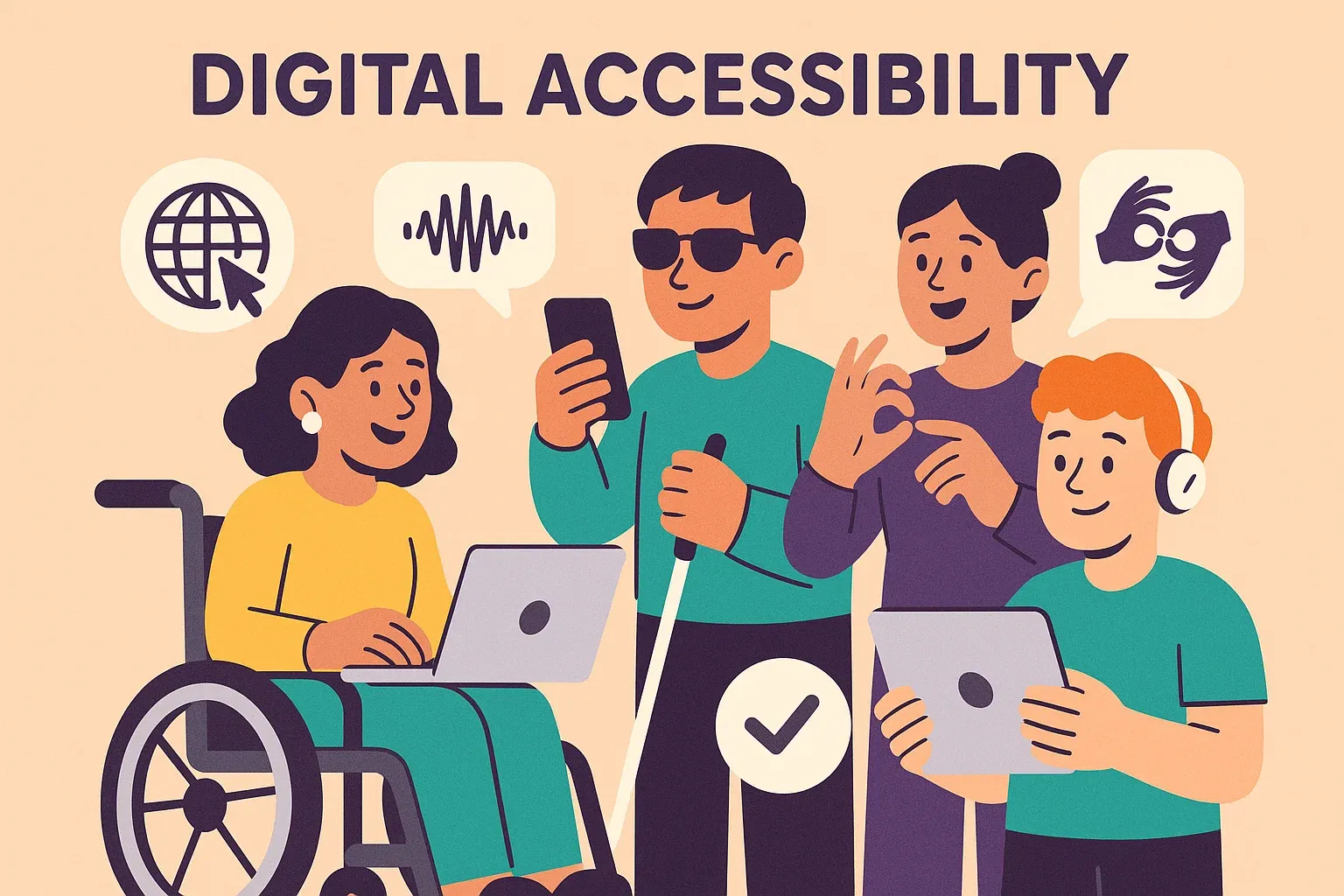
Digital accessibility is often misunderstood as a late-stage checklist or a compliance-only concern. But in reality, it's a strategic decision that affects the reach, usability, and long-term value of every product. Accessibility is not just a feature; it’s a foundational part of inclusive design that intersects with ethics, business sustainability, and innovation.
This article explores three key dimensions of accessibility:
- The real-world impact and scope
- The legal landscape across Europe and Norway
- Why going beyond minimum compliance levels matters
Whether you're involved in product design, software engineering, content strategy, or business leadership, accessibility is a shared responsibility—and a growing opportunity that aligns with modern digital expectations.
1. The Real Impact of Accessibility
Accessibility isn't just a technical consideration—it’s a matter of inclusion, equity, and user experience. Designing for accessibility means designing with empathy, considering a spectrum of human abilities and creating products that empower every user.
Key Stats:
- 1.3 billion people worldwide live with a significant disability (roughly 16% of the global population).
- 1 in 5 users of any digital product may face accessibility challenges.
- 96.3% of the world’s most visited websites have basic accessibility issues. (WebAIM 2023)
This isn't just a statistical issue—it reflects real-life friction. Users may struggle to understand text, navigate interfaces, or interact with core features. These issues create exclusion not by intent, but by lack of proactive design. At the same time, accessibility improvements like larger tap areas, clear language, or visual contrast often benefit everyone—not just people with disabilities.
When we ignore accessibility, we're not just excluding edge cases—we're excluding millions of users. And when we design with accessibility in mind from the start, we improve usability, retention, and brand loyalty across the board.
2. Legal Requirements in Europe and Norway
Accessibility is no longer a "nice-to-have"—it's the law in many jurisdictions. The regulatory landscape is evolving rapidly, reflecting a broader shift in expectations around inclusive digital services.
In the European Union:
- The EN 301 549 standard mandates compliance with WCAG 2.1 (levels A and AA) for most public-sector websites and many private-sector services, particularly in areas like transportation, telecommunications, and financial services.
- WCAG 2.2, released in 2023, includes additional improvements (e.g. support for cognitive accessibility and better mobile experiences). However, it is not yet harmonized with EU law, though adoption is expected around 2025.
Organizations that proactively align with WCAG 2.2 today not only prepare for legal certainty—they also future-proof their products and processes.
In Norway:
- The Equality and Anti-Discrimination Act applies to digital products.
- Public websites must comply with WCAG 2.1 A/AA.
- Private-sector services are currently required to follow WCAG 2.0 A/AA, though updates are anticipated.
Enforcement is growing stronger as governments recognize that accessibility ensures digital equality. For businesses, non-compliance is increasingly associated not just with fines, but also with reputational risk and user dissatisfaction.
If your digital product operates in these regions, you should already be aligned with the correct version and levels—or actively planning updates, audits, and improvements.
3. Going Beyond Level A: A Strategic Advantage
WCAG (Web Content Accessibility Guidelines) is structured in three levels:
- Level A: Minimum accessibility
- Level AA: Widely accepted best practice (and often legally required)
- Level AAA: Highest standard, providing full inclusion when feasible
If your product only meets Level A, it’s doing the bare minimum. Level A ensures basic functions—such as keyboard navigation, alt text for images, and form labeling. While these are critical, they don't address broader usability needs.
Level AA adds:
- Stronger color contrast requirements
- Visible focus indicators for navigating without a mouse
- Content reflow and scaling without losing functionality
- Better support for users with visual, hearing, or cognitive impairments
Going beyond compliance brings tangible benefits:
- Improves usability for all users, not just those with disabilities
- Reduces bounce rates, abandonment, and frustration
- Builds trust, loyalty, and long-term engagement
- Supports your brand reputation and digital maturity
In many cases, features built to support accessibility—like clearer forms, intuitive navigation, or voice-friendly design—become features that everyone loves. That's the strategic edge: accessibility is quality.
Accessibility is not just about checking boxes. It’s about designing for dignity, independence, and ease of use—for everyone, regardless of ability.
Conclusion
Legal requirements may be the starting point. But the real opportunity lies in designing for everyone from the beginning. Accessibility fosters innovation, strengthens your brand, and unlocks access to wider markets.
Accessibility is not just ethical—it’s essential. It’s part of building smarter, more inclusive, and future-proof digital products. When digital services are accessible, they become more usable, more resilient, and more aligned with the world we want to build.
If you’re ready to explore how accessibility can add real value to your digital strategy, let’s connect.
#accessibility #digitalinclusion #UI #digital #web # regulations #UX #WCAG #webstandards #inclusiveweb #productstrategy #matekraft #guidoquadrini #a11y #design #guidoquadrini